Agriculture Is Somalia’s Economic Future
Bismillaahi Raxmaani Raxiim.
Excellences, Honorable Ministers present, distinguished guests and government officials, development partners, investors, farmers, entrepreneurs, members of the private sector, ladies and gentlemen — Assalamu Alaikum Warahmatullahi Wabarakatuh.
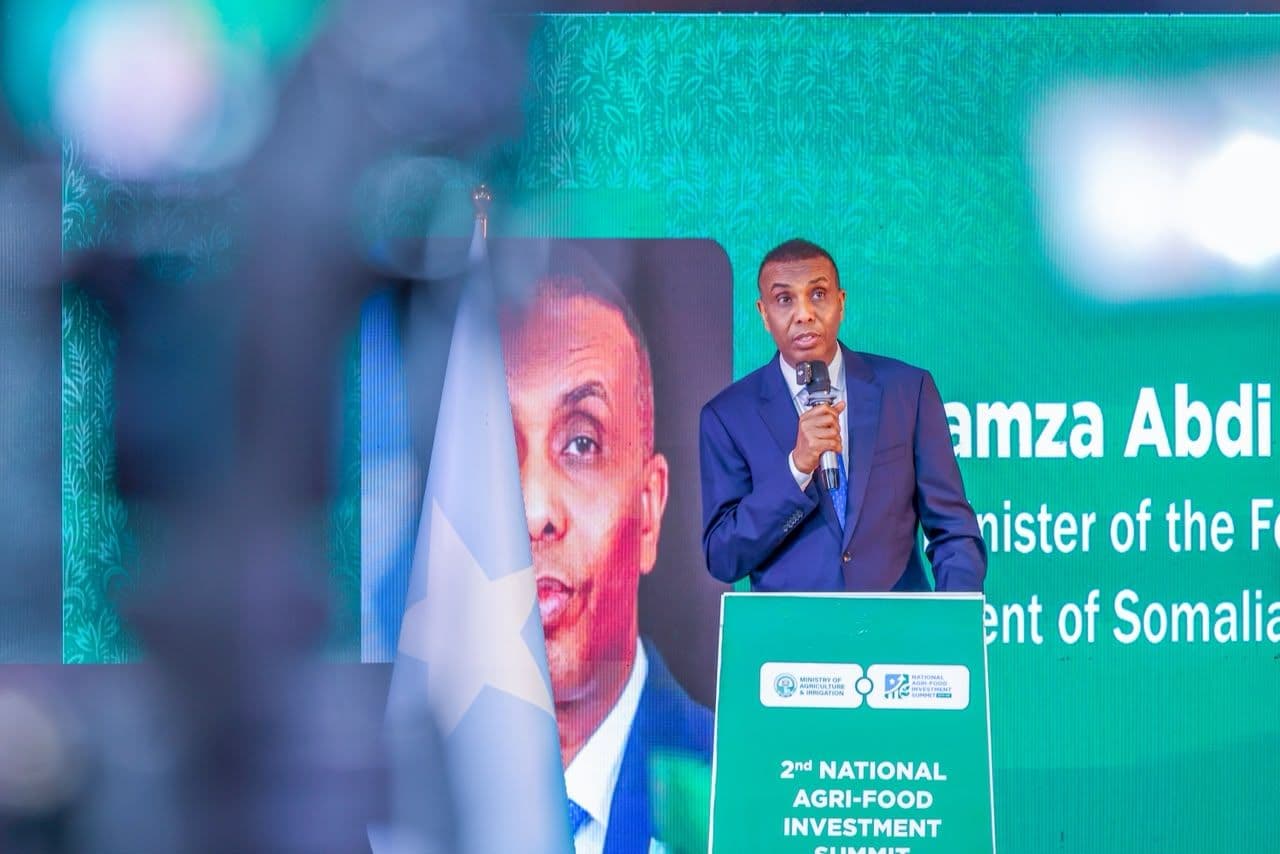
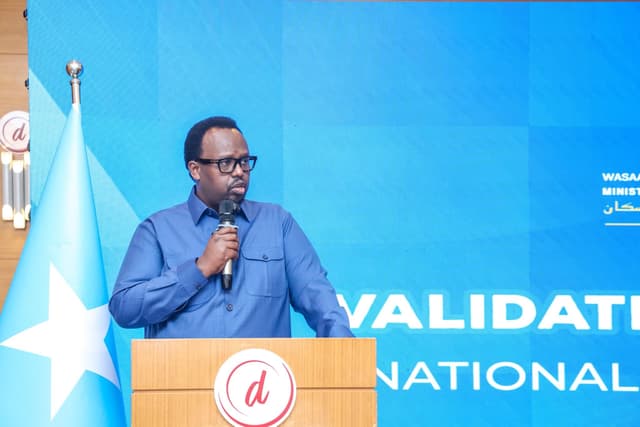
It is an honor to join you at the second National Agri-Food Investment Summit.
I am here today with a simple message:
Somalia must move from importing its food to producing its food — and from producing raw products to exporting value.
Agriculture is not a side issue in Somalia’s economy.
It is one of the foundations of our national transformation.
It is where food security, jobs, exports, rural development, poverty reduction and national prosperity meet.
We have spent too many years discussing Somalia’s agricultural potential.
The time has come to invest in it.
Today, about 75 percent of our food needs are imported, while only about 25 percent is produced locally.
That means every day, Somali families consume food that has been produced somewhere else, transported from somewhere else and paid for with foreign currency.
This is not only a food-security problem.
It is a balance-of-payments problem. It is a jobs problem. It is an investment problem.
Every dollar we spend importing food is a dollar leaving our economy.
But if we produce that food here, that same dollar can circulate among a Somali farmer, a Somali transporter, a Somali processor, a Somali trader and a Somali family.
Therefore, our objective is:
To grow what we currently import, process what we currently export and create enough productive capacity to feed Somalia sustainably.
This is about becoming strong enough to compete in the world.
Somalia has more than 8.5 million hectares of arable land.
Yet we are utilizing only a small fraction of this extraordinary resource.
This is one of the biggest untapped economic opportunities in our country.
Our rivers, particularly Juba and Shabelle, our groundwater, our livestock resources and our diverse agro-ecological zones give Somalia a natural foundation for a competitive agri-food economy.
The question is no longer whether Somalia has agricultural potential.
The question is whether we have the courage, capital, technology and policy to unlock it.
I believe we do. And this Government is determined to make that happen.
Investment does not grow where policies are uncertain.
Investment does not grow where regulations are unpredictable.
And investment does not grow where investor does not know who is responsible for the decision.
Therefore, my Government will strengthen policies that make agriculture and agribusiness investable.
We will work to make land access, irrigation, taxation, finance, licensing, market access and investor protection more predictable.
We will strengthen enabling environment for domestic and international investment.
We will support an environment where a farmer can become an entrepreneur, where an entrepreneur can become an agribusiness and where an agribusiness can become an exporter.
Our message to investors is that Somalia is open for agricultural investment.
We want investment in farms.
We want investment in irrigation.
We want investment in machinery.
We want investment in storage and cold chains.
We want investment in processing, packaging and certification.
And we want investment in people who make this entire system work.
One of the biggest barriers facing Somali farmers is the cost of production.
We cannot ask a farmer to compete with imported food while farming with outdated tools, limited irrigation and expensive machinery.
Government therefore has a responsibility to act.
We will pursue mechanisms to support and incentivize agricultural mechanization, including appropriate subsidies and financing arrangements for farming machinery.
We want tractors in our fields.
We want modern irrigation.
We want harvesting equipment.
We want storage facilities.
We want processing machinery close to where crops are produced.
Mechanization is not about replacing Somali farmers.
It is about giving Somali farmers tools to produce more, faster and more profitably.
And I am pleased that this Summit itself is connecting investors and farmers with agricultural mechanization financing.
This is exactly the kind of practical action we need.
There is another reason why agriculture is central to our national agenda.
You cannot have agricultural transformation without security.
Our latest poverty analysis has shown something deeply important.
Some of the communities most affected by poverty are communities that were once among Somalia’s breadbaskets.
Farmers were not poor because their land was poor.
Many were prevented from farming because terrorists occupied forests, roads and rural areas and used them as bases for violence.
Al-Shabaab has not only attacked our people.
It has attacked our economy. It has attacked our farmers. It has attacked our food security.
This is why Dan-Qaran Government has made the fight against Al-Shabaab a national priority.
We have liberated large areas of our country.
We have opened roads and communities.
We have restored the presence of the state.
And we will continue our operations until this terrorist threat is defeated.
Every village we liberate is a potential agricultural investment zone.
Every road we secure can carry crops to market.
Every farmer who returns to his land strengthens Somalia’s economy.
Security, therefore, is an economic policy.
This is where our National Transformation Plan — NTP becomes so important.
NTP is our national pathway from vulnerability to productivity.
Through NTP, we are building a modern, productive and competitive agri-food system.
We will increase productivity through modern technology, mechanization and climate-smart agriculture.
We will strengthen agricultural value chains.
We will reduce post-harvest losses.
We will improve market access.
We will expand opportunities for farmers and agro-pastoralists.
We will strengthen extension services and access to finance.
We will invest in water harvesting and climate resilience.
And we will connect producers to processors, processors to markets and markets to consumers.
This is how we transform agriculture from subsistence into enterprise.
Somalia cannot become a major agricultural exporter by simply producing more raw commodities.
We must add value.
We must process.
We must package.
We must certify.
We must build brands that say: Made in Somalia.
Think about sesame.
We have the potential to produce high-quality sesame, yet the greater value often comes later — through processing, oil extraction, packaging and international marketing.
We should not be satisfied with selling raw product and buying finished product back at a higher price.
The value must be created here.
The same applies to fruits, vegetables, grains, livestock products, fisheries and other agricultural commodities.
Processing creates factories. Factories create jobs.Jobs create incomes. Incomes create demand. And demand creates a stronger Somali economy.
Government cannot transform agriculture alone.
The farmer is essential.
But so is the investor.
So is the bank.
So is the processor.
So is the transporter.
So is the technology company.
So is the international development partner.
To our Somali entrepreneurs, I say:
Do not wait for Somalia's agricultural future. Build it.
To international investors, I say:
Come and invest where demand is already visible.
The Somali market already imports food.
That means the market risk is not theoretical.
The demand already exists.
Invest in production.
Invest in storage.
Invest in irrigation.
Invest in processing.
Invest in logistics.
Invest in agricultural finance.
Invest in Somali people.
We have held many conferences in Somalia.
We have signed many commitments.
We have produced many strategies.
Today, I want us to go one step further.
Let this be the Summit where commitments become investment.
I want every participant to leave this room asking one practical question:
What can I build in Somalia?
One investor should leave with a farm project.
Another with a processing plant.
Another with a storage facility.
Another with a financing product for farmers.
Another with an irrigation project.
Another with an export business.
And Government must leave with clear responsibilities, clear timelines and clear targets.
We should measure ourselves not by the number of speeches we make, but by the number of hectares cultivated, the number of farmers financed, the number of factories established, the number of jobs created and the number of dollars retained in Somalia.
I want us to imagine Somalia five years from now.
More land under cultivation.
More farmers using modern machinery.
More irrigation.
More food produced locally.
More warehouses and cold chains.
More processing plants.
More Somali agricultural brands in regional and international markets.
More jobs for our young people.
And fewer dollars leaving Somalia to buy food that Somalis can produce themselves.
Distinguished guests,
Somalia is entering a new chapter. We are moving from emergency to resilience.
Cultivate, invest and make Somalia prosperous.
I declare the Second National Agri-Food Investment Summit — NAFIS 2026 — open.
June 13, 2026
June 13, 2026
May 11, 2026